Posting toproll: build a high post without losing the hand
A guide to knuckle height, posting pressure, rotation, pad travel and the trade-offs that distinguish this variation from low-hand toproll.
Contents
What posting prioritizes
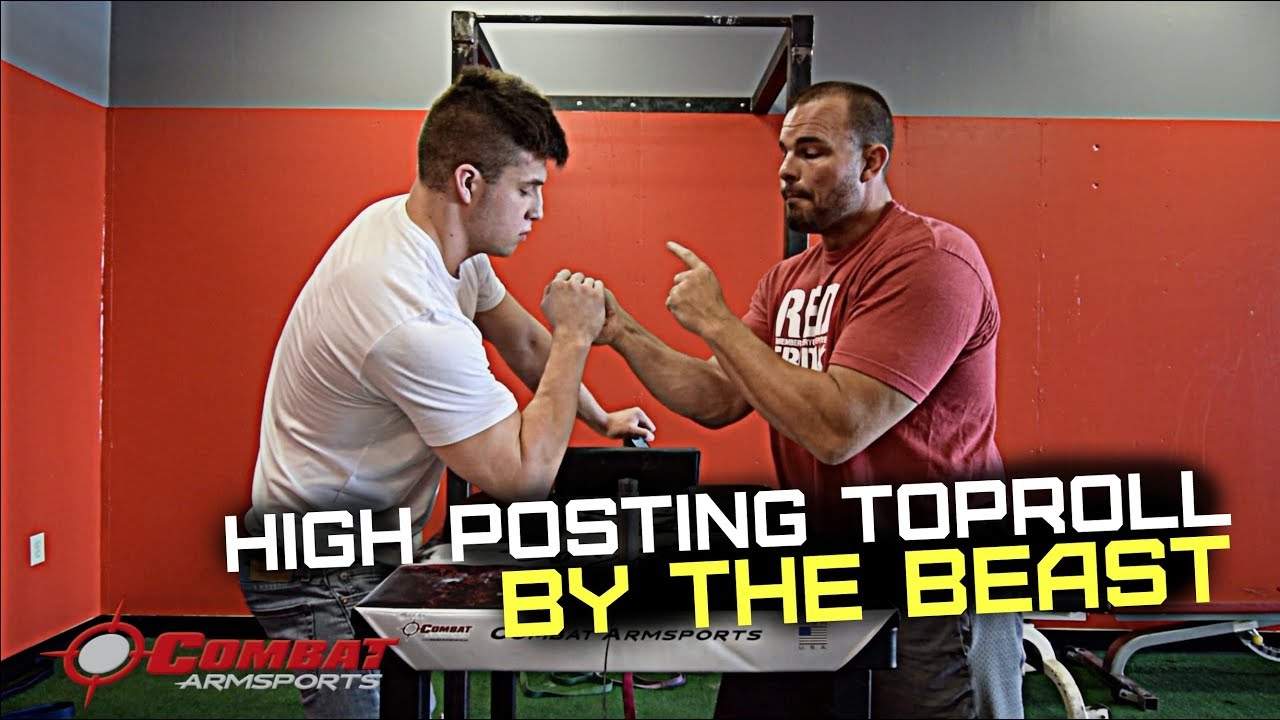
Posting toproll prioritizes a high, stable post, loading a less favorable part of the opponent's grip. It remains a toproll: rotation and hand connection still matter. Elevation alone is not an advantage if the opponent retains cup and turns you freely.
Wrist rise and lifting through the forearm angle are related but distinct. Strong elbow flexion can coexist with a collapsed riser, so a gym pulling number does not establish posting ability.
Build a legal starting post
Choose an elbow position that coordinates forearm and body while leaving room for the intended path. There is no universal pad corner for every right-handed athlete; the opponent's intended pressure matters.
A high grip must remain containable and referee-approved. Do not lift the elbow for height. An advantage that depends on an illegal start is not a usable competitive technique.
After Go: elevation with rotation
Load the post while maintaining pronation through the grip. The opponent should face a finger-and-wrist problem, not merely an upward arm pull. Cup can support containment, but a deep curl may redirect the exchange into a hook.
Test height against light downward pressure, then add rotational resistance. If pronation only works after the post collapses, practice coordination before faster starts.
Convert height into a finish
Height does not itself win the round. Convert the hand advantage through coordinated pulling, rotation and movement toward the pin while the shoulder follows. A static high hold may exhaust you while the opponent rebuilds cup.
Respect the remaining pad space. At its edge, choose a controlled hold, a different force direction or a justified transition rather than pulling the elbow off.
The trade-off against low-hand
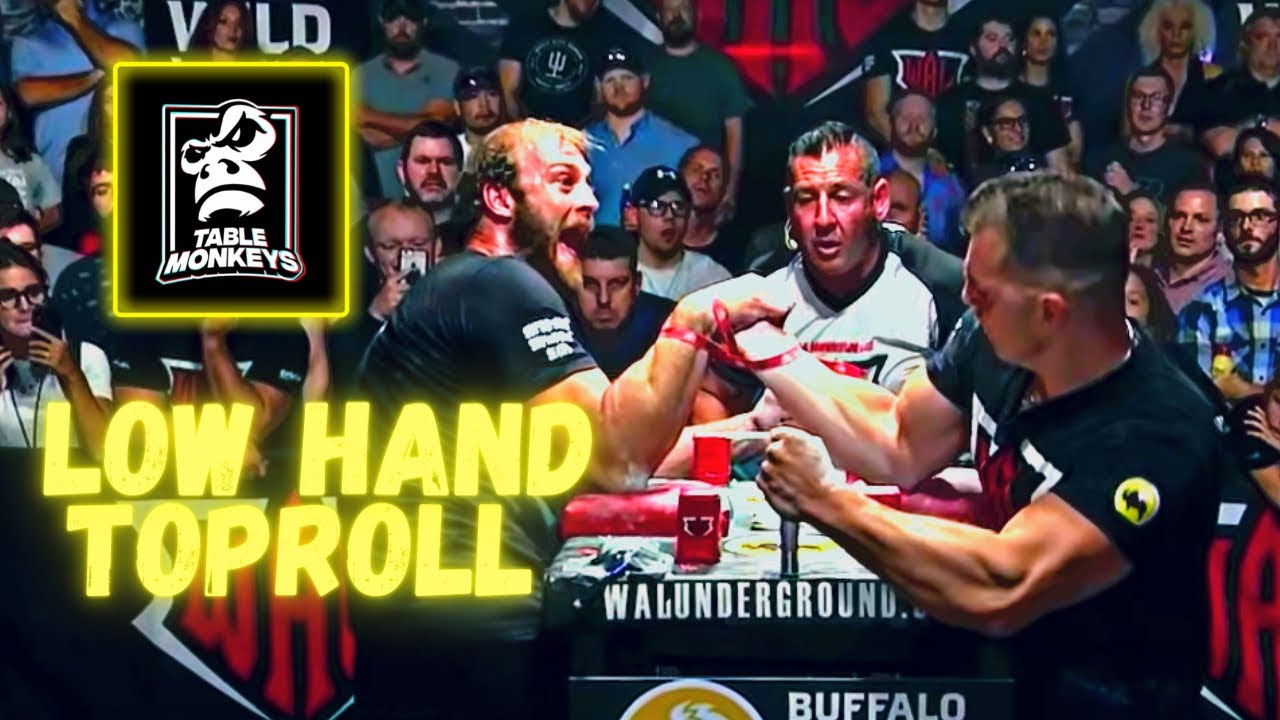
Posting seeks the upper-grip advantage, while low-hand may redirect pressure lower in the grip. That is why the higher-looking hand in a still is not automatically winning. Cup, pronation and resistance to separation remain necessary.
Neither low-hand nor long arms guarantee success. Compare the variations cooperatively and inspect the wrist response before choosing what fits your strengths.
How the post is lost
Errors include elbow flexion with a collapsed riser, excessive grip tension, elevation without pronation and shoulder retreat without hand movement. Copying another athlete's exact pad placement can create the same problem.
An opponent may attack rise, separation or the timing of inside entry. Distinguish wrist-height failure from forearm-angle failure instead of compensating with a harder lateral hit.
A practical progression
Start with predictable rise resistance, then combine posting and pronation on the table. Use inspectable efforts with a controlled return to center and an immediate stop when requested.
For cable or strap work, match the load direction to the missing component. Progress means retaining structure as resistance increases appropriately, not merely completing one heavy lift. Supervise added side pressure and pressing transitions.
Video reference and viewing focus
Watch the transition from grip to changing force direction. Pause to inspect the hand, then continue to understand the sequence; a still image cannot substitute for movement.
Continue the technique series
- An armwrestling technique map: hook, toproll, press and their variations
- The armwrestling hook: inside entry, cup and a controlled finish
- High hook: retaining hand height in the inside game
- Toproll: hand control through pronation and pulling
- Low-hand toproll: redirect pressure without surrendering the hand
- King's Move: outside defense, rules and misconceptions
- The armwrestling press: enter with structure, not a shoulder dive
- Flop-wrist press: driving with an extended wrist and its trade-offs
Sources & further reading
- Combat Armsports — High Posting Toproll by The Beast
- Voice of Armwrestling — Toproll & Hook Explained
- Mazurenko Japan / GLINT — đường chuyển động toproll
- Mazurenko Japan / GLINT — tư thế và vị trí khuỷu
- TAWF — Hook, Toproll & Press
- EVW Sports — luật thi đấu hiện hành, mục 4.3–4.5
- Nguồn hình minh họa / Illustration source