Toproll: hand control through pronation and pulling
Understand the outside attack, how rotation works with pulling, the role of cup and height, and why simply leaning backward is not enough.
Contents
Attack the connection at the hand
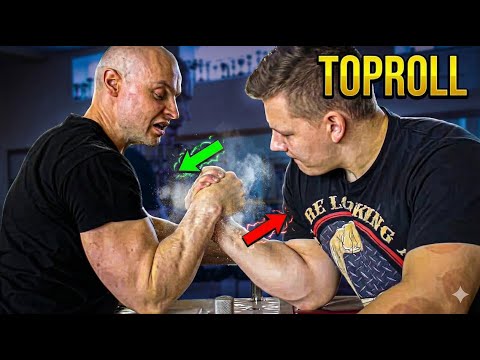
Toproll challenges the opponent's finger containment and wrist position. Losing those connections makes arm strength harder to express through the grip. It is not a trick that automatically defeats a stronger athlete.
The core is pulling combined with pronation, supported by appropriate cup and hand height. Pulling straight back may move the match without opening the wrist; rotation without leverage may also fail.
Separate pronation, cup and rise
Pronation is forearm rotation, not a sideways wrist flick. Cup helps retain the grip; rise preserves useful knuckle height. Pronation may remain relatively static while the elbow and body reposition.
Crushing the grip does not replace those actions. A very tight grip can still sacrifice height or wrist position. Learn the difference between finger containment and rotational resistance under light load.
A slow sequence you can inspect
1. Start legally: centered hands, a referee-approved wrist and usable pad space. 2. After Go: load the grip with pulling while preserving the required height. 3. Maintain pronation: attack containment without simply opening your own fingers to escape.
4. Once the opponent loses useful hand position: coordinate a controlled path toward the pin. These components overlap in competition; separating them is a learning tool, not a mandatory pause sequence.
A three-dimensional path within pad limits
Mazurenko Japan's diagrams separate lifting, drawing and finishing to show that toproll is not a flat sideways motion. The arrows are a model, not an identical path for every body or opponent.
Know the remaining elbow-pad travel. Continuing to lean after that travel is exhausted can disconnect the arm or produce a foul. The technique must work inside the competition space.
Posting, low-hand and outside defense
Posting prioritizes a high post and upper-grip control. Low-hand redirects pressure through a relatively lower hand line, often accepting less rise. Outside defense may open the elbow angle further. These priorities do not prescribe one grip for everyone.
Instead of changing variations after every loss, identify whether height, cup, pronation or body connection failed. The separate posting and low-hand guides examine those trade-offs.
Opponent responses and self-inflicted errors
A hook can deny the outside lane by securing containment first. A press may threaten a toproller who loses center and merely hangs away. A premature press can itself be dragged apart. Timing and position determine the counter.
Common errors are retreating without pronation, surrendering the wrist, lifting the elbow for height and turning the torso away from the hand. Lower the resistance when control exists only before load arrives.
Build coordination before adding resistance
Practice pronation resistance, then combine it with pulling, then add a finish. The partner should apply predictable pressure rather than surprise surges. Front and side recordings reveal different errors.
Appropriate pronation, rise, cup and pulling exercises can support the technique. Load direction matters more than an impressive number. Avoid maximal twisting against a trapped arm and stop when pain or loss of alignment appears.
Video reference and viewing focus
Watch the transition from grip to changing force direction. Pause to inspect the hand, then continue to understand the sequence; a still image cannot substitute for movement.
Continue the technique series
- An armwrestling technique map: hook, toproll, press and their variations
- The armwrestling hook: inside entry, cup and a controlled finish
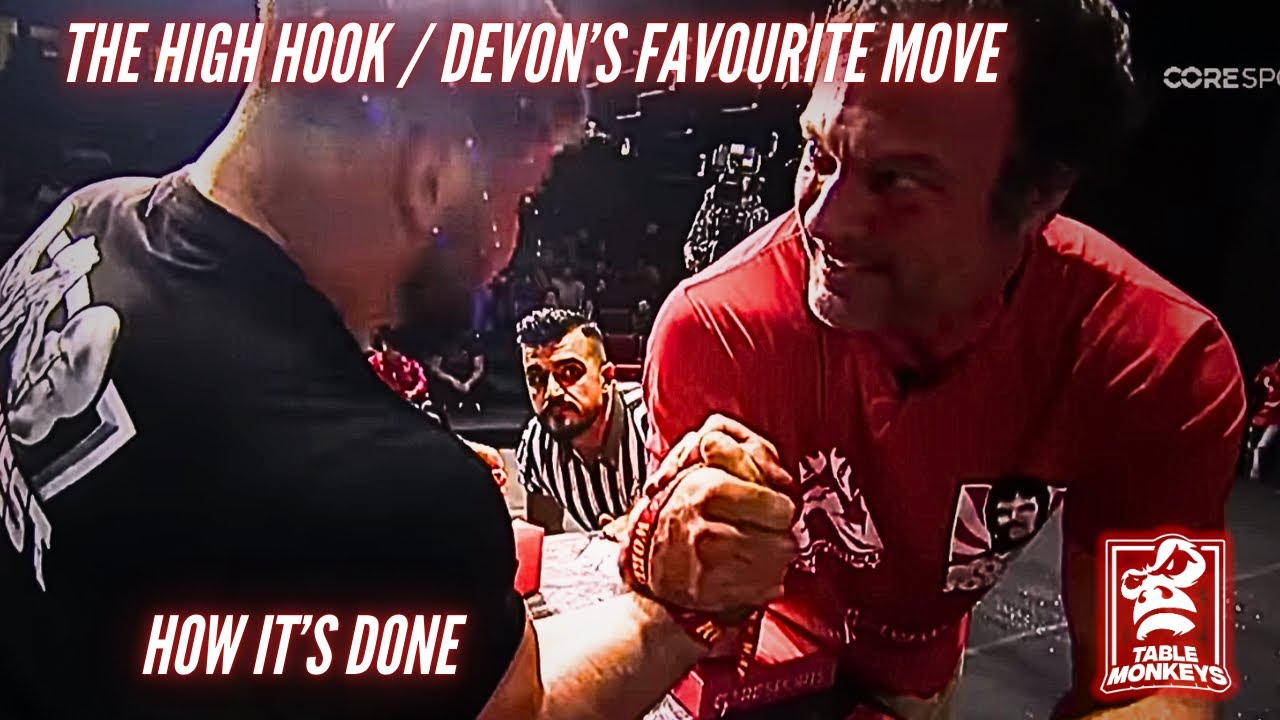
- High hook: retaining hand height in the inside game
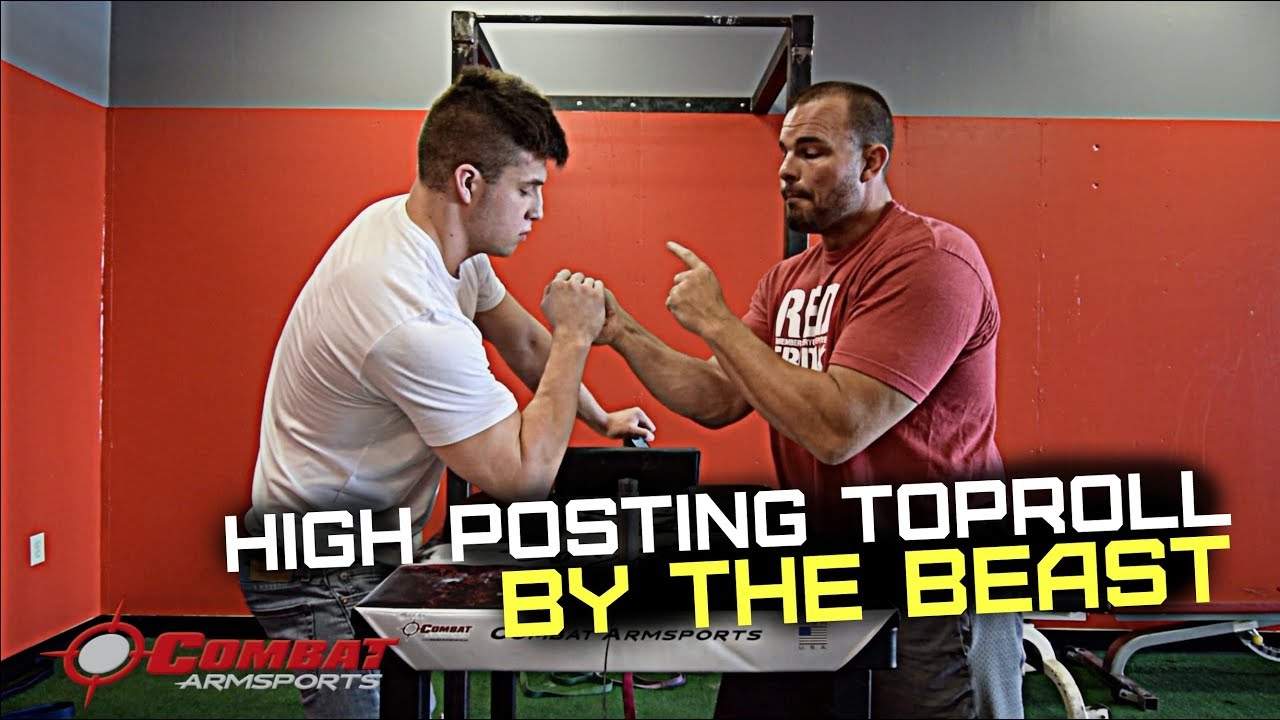
- Posting toproll: build a high post without losing the hand
- Low-hand toproll: redirect pressure without surrendering the hand
- King's Move: outside defense, rules and misconceptions
- The armwrestling press: enter with structure, not a shoulder dive
- Flop-wrist press: driving with an extended wrist and its trade-offs
Sources & further reading
- Voice of Armwrestling — Toproll technique
- Voice of Armwrestling — Toproll & Hook Explained
- Mazurenko Japan / GLINT — đường chuyển động toproll
- Mazurenko Japan — hướng dẫn và ảnh hook/toproll, 22/11/2020
- Voice of Armwrestling — Hook vs Toproll
- EVW Sports — luật thi đấu hiện hành, mục 4.3–4.5
- Nguồn hình minh họa / Illustration source