Low-hand toproll: redirect pressure without surrendering the hand
Learn what lower hand position means, why it differs from a collapsed wrist, and how rotation, containment and back pressure determine the result.
Contents
What is lower in low-hand?
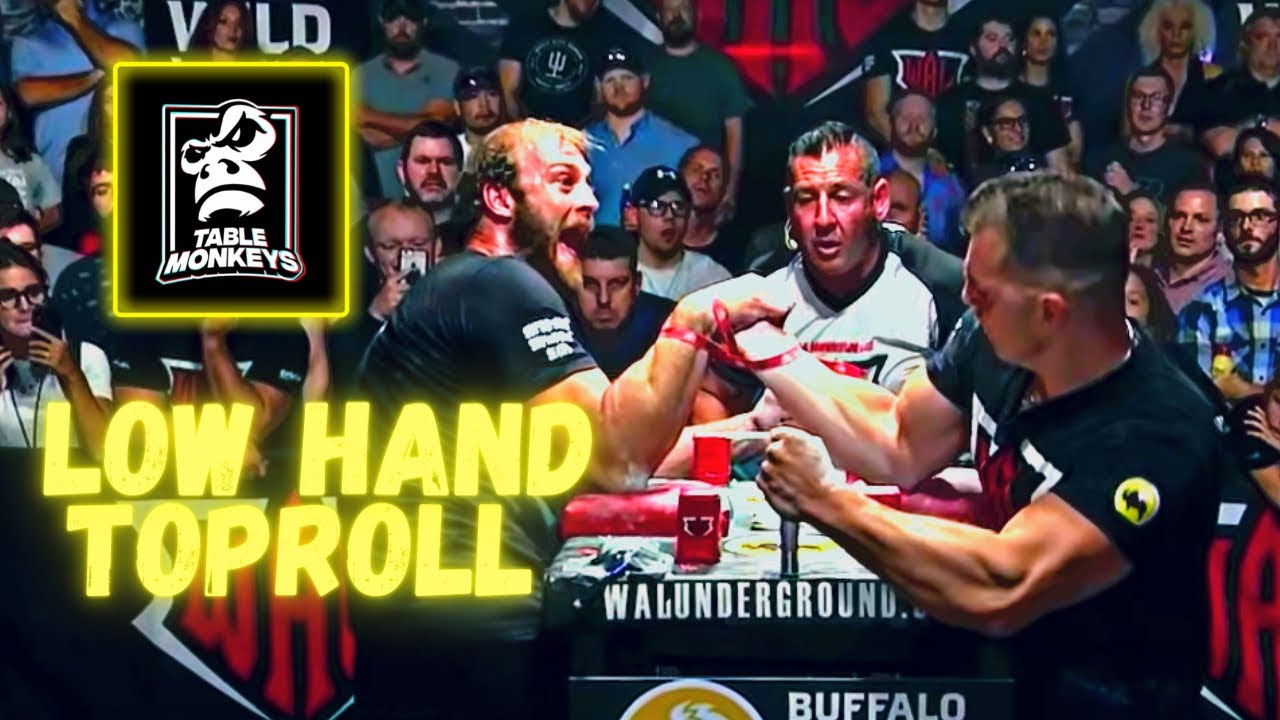
Low-hand toproll accepts a relatively lower hand or knuckle line than a posting approach and redirects pronation and pulling through the grip. The aim is not to win the height contest at any cost.
Relatively low does not mean an off-pad elbow, a shoulder under the table or a limp wrist. Nor does the term identify every backward defensive lean. Organized rotation and connection are still essential.
Less rise is not lost rotation or containment
Some versions use more little-finger-side wrist deviation, but that differs from backward wrist extension. Active pronation still resists being turned palm-up, and containment must preserve the grip.
Dropping the knuckles and pulling blindly may simply burden your own hand. Check whether the opponent actually faces a worse lever rather than assuming a predetermined rise-for-pronation exchange.
Prepare and enter the outside lane
Start legally with elbow travel and a shoulder position that can follow the hand. After Go, combine pulling and pronation while retaining the intended grip connection. Any wrist-deviation adjustment should remain controlled rather than extreme for its own sake.
A partner can provide a gentle hook attempt to test whether their cup is being denied. If your fingers fail before rotational pressure develops, fix containment rather than dropping deeper.
Why it is often used against a hook
A hook needs containment and closeness. Low-hand may make that establishment difficult by redirecting rotation and pulling into a grip line the hooker struggles to close.
It is not a guaranteed counter. Compare an initially neutral grip with a position where the opponent already has deep cup. The same pressure can work in the first situation and fail in the second.
Read the position against posting or press
Against posting, a lower hand line can shift which fingers bear load but may also concede too much height. Continuing to drop after losing both height and cup only worsens the exchange.
Against a press, deny the shoulder-to-hand line before it is established. Once a structured press is already driving, twisting the torso and hanging on elbow flexion is a poor rescue. Rehearse controlled exits early with supervision.
Different from King's Move and dead wrist
Low-hand describes a hand-pressure priority within toproll; King's Move describes a more open outside defensive position. They can overlap but are not synonyms. Little-finger-side deviation also differs from the extended wrist of a flop press, which commits inside.
The Janis defensive-toproll reference supplies related outside-defense context, not a claim that every detail in it uniquely defines low-hand. Still images establish neither legality nor safety by themselves.
Practice and error checks
Separate pronation resistance, finger containment against cup and pulling without shoulder separation. Combine them under light table resistance, changing one incoming pressure per drill.
Correct excessive dropping, concealed cup failure, retreat beyond pad travel and palm-up collapse. Progress means a controllable force path and a safe stop—not a lower silhouette or greater pain tolerance.
Video reference and viewing focus
Watch the transition from grip to changing force direction. Pause to inspect the hand, then continue to understand the sequence; a still image cannot substitute for movement.
Continue the technique series
- An armwrestling technique map: hook, toproll, press and their variations
- The armwrestling hook: inside entry, cup and a controlled finish
- High hook: retaining hand height in the inside game
- Toproll: hand control through pronation and pulling
- Posting toproll: build a high post without losing the hand
- King's Move: outside defense, rules and misconceptions
- The armwrestling press: enter with structure, not a shoulder dive
- Flop-wrist press: driving with an extended wrist and its trade-offs