Flop-wrist press: driving with an extended wrist and its trade-offs
Distinguish a structured dead-wrist press from a lost wrist. Covers shoulder entry, straps, defensive responses and the limits of copying a competition silhouette.
Contents
Wrist extension is a trade-off, not total surrender
Flop-wrist or dead-wrist press accepts wrist extension instead of requiring a winning cup first, while preserving enough connection for a shoulder-and-arm drive. Extension alone identifies neither a successful press nor a deliberate technique.
The name does not instruct total relaxation. Giving up fingers, rotation and posture together does not create a move. Athletes may concede one component while retaining other connections, in different proportions.
How it differs from a wrist-retaining press
A wrist-retaining press can use cup or a relatively straight wrist for grip control. Flop pressing accepts a different wrist condition, but generally leaves fewer ordinary hand-control options and demands a usable shoulder and elbow position.
Losing the wrist during a toproll and falling forward is not automatically a sound transition. Check shoulder entry, remaining pad travel and the opponent's separation pressure first.
What to inspect in video
Inspect when the wrist extends relative to shoulder entry. Does the arm remain inside a usable frame, or has the torso run ahead? Then examine elbow contact and whether the athlete can adjust under resistance.
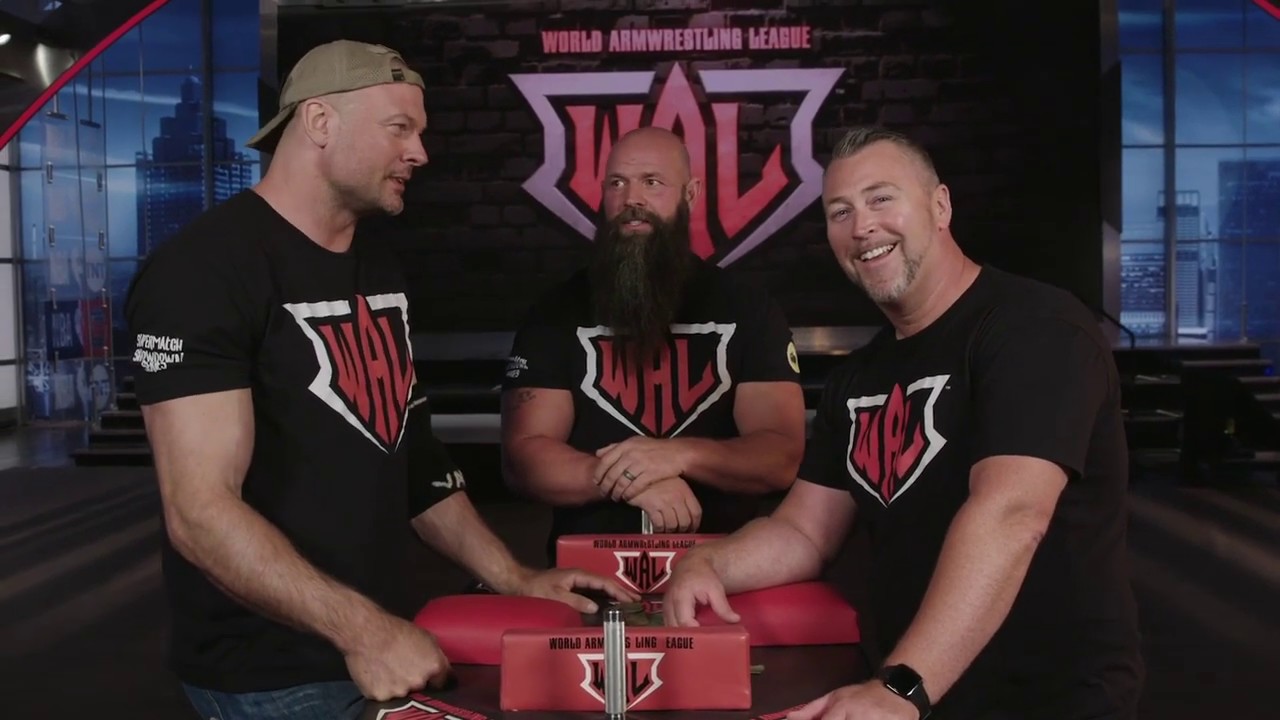
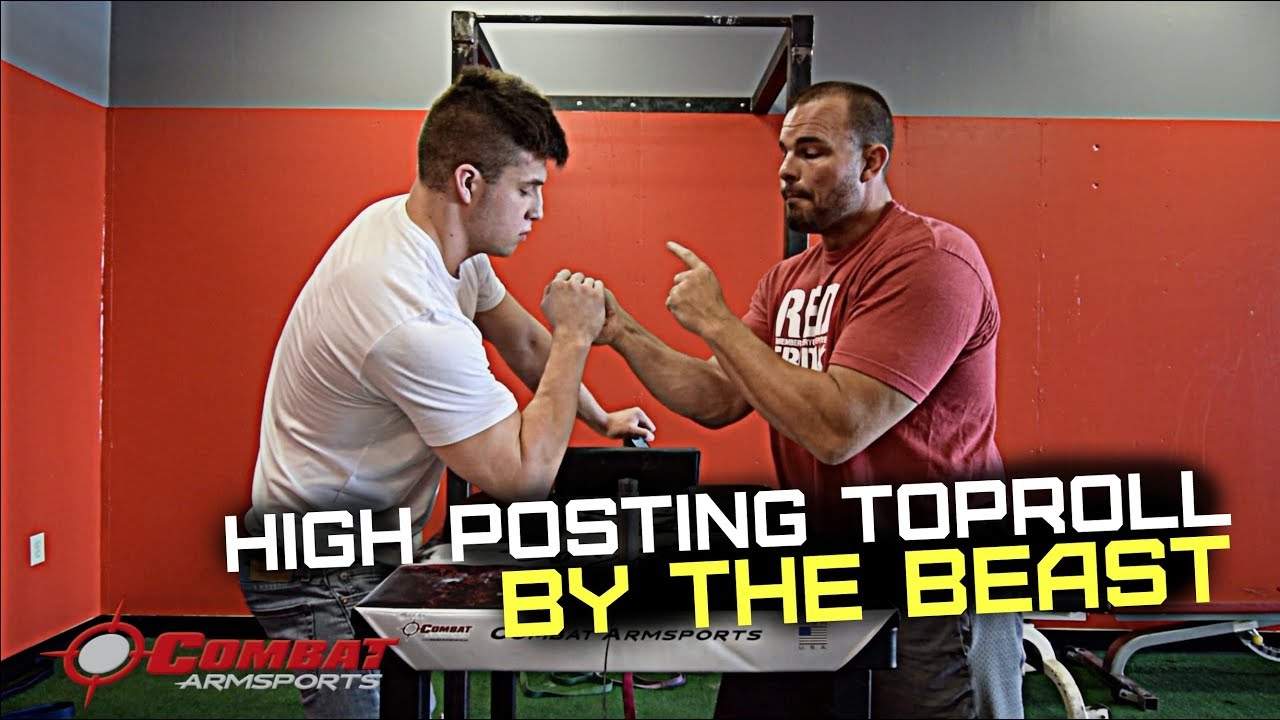
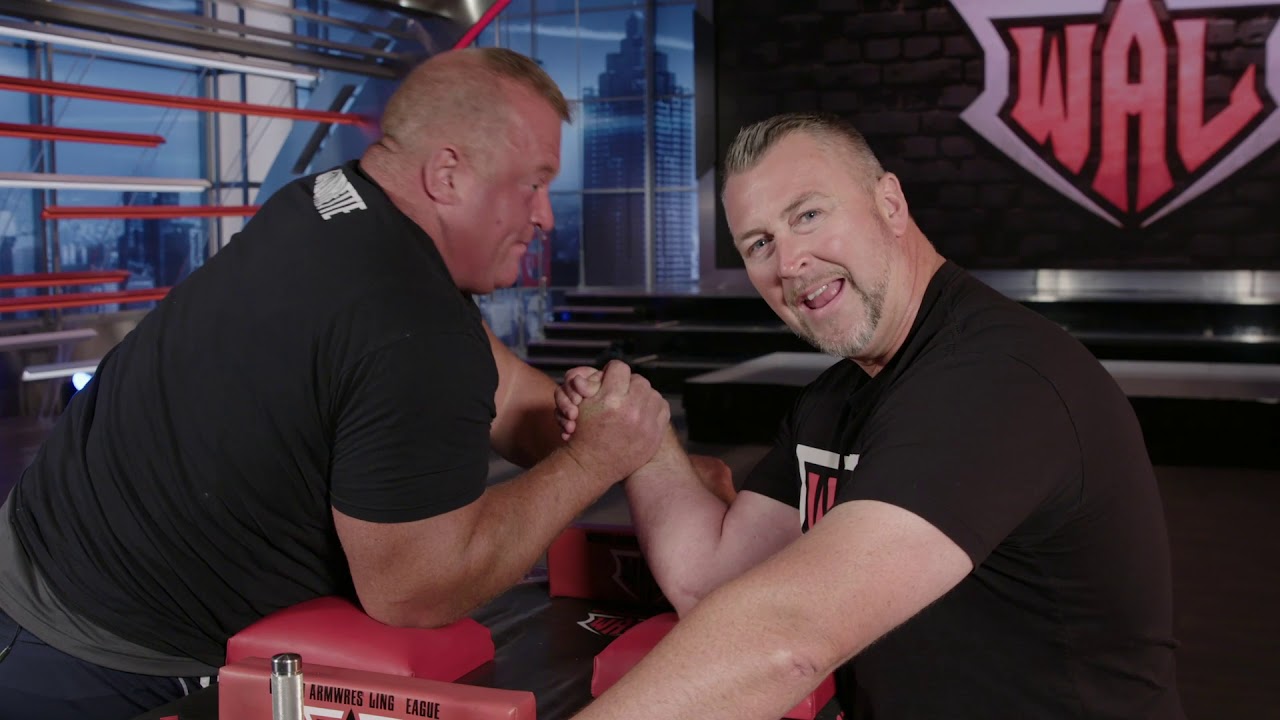
The WAL image with Jerry Cadorette and Neil Pickup is a video preview, not a step-by-step sequence. The Janis Amolins and Coach Ray counter tutorial provides an additional view of the pressure relationships.
Straps preserve connection, not victory
Straps can preserve the force connection even without conventional finger dominance, which explains their relevance in many flop-press exchanges. That does not make them a requirement for every instance or a guarantee of success.
Grip position, separation pressure and shoulder access still matter. Straps do not remove fouls or make heavy wrist-and-arm loading harmless.
Counter by denying the useful entry
One response is to use pulling and hand direction to deny a useful shoulder entry. Another targets the presser's rotational connection. The Voice of Armwrestling counter tutorial should not be reduced to a guaranteed single-move answer.
Preventing entry differs from rescuing an established losing position. Retreating and twisting after the structure is already set can increase risk; reset the drill instead.
Is the extended wrist itself a foul?
An extended wrist during a live round is not automatically cheating. Officials assess actual starting, centerline, body-contact, elbow and dangerous-position violations under the event rules. Do not confuse the technical name with unrelated uses of the word flop.
A famous athlete's use of the label cannot prove a particular pin legal either. Historical WAL instruction and current EVW regulations serve different purposes.
Learn structure before conceding the wrist
Learn connected pressing, controlled shoulder entry and a safe stop before exploring an extended-wrist variation. With qualified supervision, use low resistance and a short reversible path. Do not force the wrist to end-range extension under heavy load.
Stop for sharp pain, numbness, elbow displacement or torso rotation away from the hand. Muscular strength and a strap do not establish readiness. This is a specialized technique, not a universal emergency escape.
Video reference and viewing focus
Watch the transition from grip to changing force direction. Pause to inspect the hand, then continue to understand the sequence; a still image cannot substitute for movement.
Continue the technique series
- An armwrestling technique map: hook, toproll, press and their variations
- The armwrestling hook: inside entry, cup and a controlled finish
- High hook: retaining hand height in the inside game
- Toproll: hand control through pronation and pulling
- Posting toproll: build a high post without losing the hand
- Low-hand toproll: redirect pressure without surrendering the hand
- King's Move: outside defense, rules and misconceptions
- The armwrestling press: enter with structure, not a shoulder dive
Sources & further reading
- World Armwrestling League — Dead-wrist Press
- Voice of Armwrestling — How to Beat Flop Wrist Press
- Voice of Armwrestling — Triceps Press
- EVW Sports — luật thi đấu hiện hành, mục 4.3–4.5
- Maharashtra Arm Wrestling Association — Techniques
- Ogawa và cộng sự, 2022 — tổng quan hệ thống gãy xương cánh tay khi vật tay