Toproll training: combine pronation, pulling and hand retention
Build a compact outside-pulling session, identify when height or containment matters and transfer isolated strength into a cooperative hand-control drill.
Contents
Toproll needs coordinated force
Pronation controls palm orientation, back pressure supplies pulling and cup/fingers transmit force through the grip. Rise has different roles in posting and low-hand versions. A heavy isolated pronation lift does not solve an opening elbow or slipping grip.
Prioritize the actual limitation: palm rotation, elbow angle or height. Keep other work modest. Separate posting and low-hand guides avoid treating all outside pulling as one grip position.
Exercise A: standardized pronation
Support the elbow and route a flat strap so the resistance tries to supinate the hand. Retain the chosen neutral or modestly cupped wrist and pronate or hold over a small segment, then lower deliberately. Verify routing for each arm separately.
Use two sets of 10–15, about three repetitions in reserve. Record changed leverage as a new variation. Thumb-joint pain or numbness requires correction rather than being an expected feature of pronation work.
Exercise B: retain the elbow angle
Choose a hammer curl or supported cable/strap curl. Keep torso and shoulder controlled, flex through a repeatable range and lower slowly. Use two sets of 8–12, resting 90–120 seconds, without leaning away to lock the structure.
Reduce load and review the handle if the wrist opens before the elbow works. Do not count pulling with a collapsed hand as the same task. Hand failure changes how elbow strength reaches the opponent.
Exercise C: choose cup or rise
If the wrist opens first, select supported wrist curls for two sets of 12–15. If a posting style loses thumb-side height first, select light rise work for two sets of 12–15 or 8–10-second holds. Choose one emphasis rather than adding every hand task.
Low-hand pulling still needs cup/containment. Posting does not require maximal cup at the expense of height. Select the accessory for your intended structure rather than another athlete's different grip.
A combined pull with intact pronation
Use less resistance than in the separate lifts, retain the pronation routing and draw a short distance toward you. Preserve palm orientation and wrist shape as the elbow flexes. Use two sets of 8–10 in place of A or B, not as a compulsory fourth exercise.
Separate the tasks again if rotation fails. Standardize each starting position and lowering point. A whole-body short lift is a different test rather than maximal complete toproll strength.
A cooperative grip-pressure drill
Work near center with a cooperative partner. Retain pronation and pull slowly to feel pressure through the grip while the partner supplies modest resistance. Unload and reset as finger or wrist control begins to disappear; no pin is required.
Do not twist individual fingers. Use a few short repetitions with feedback instead of continuous fatigue. Command-start rehearsals should remain light and coached rather than becoming maximal hits.
Track both lifting and skill
ACSM 2026 supports general progression, not a pronation-kilogram conversion to toproll level. Record setup and range in gym work and the first failing link and reset control in drills. The two forms of information complement each other.
Reduce overlapping curls and rotation near hard table sessions. One loss is not a reason to increase every variable the next day. Stop for sharp pain, numbness or uncontrolled shoulder-hand position; isolated strength does not eliminate coordination-related risk.
Exercise video reference
Use the video to study movement order and equipment setup. The sets and repetitions in this guide are Hub's adjustable starting examples for healthy adults, not the filmed athlete's prescription or a pain-treatment protocol.
Read the matching technique guide
Continue the exercise library
- An armwrestling exercise map: what to train, why and where to start
- Pronation training: straps, cables and retaining hand orientation
- Back-pressure training: elbow-angle retention and drawing the arm back
- Rise and riser training: preserve hand height without shoulder cheating
- Posting-toproll training: height with usable pulling and rotation
- Low-hand-toproll training: lower-hand rotation with retained grip
- Build an armwrestling week: two strength sessions, table time and progression
Sources & further reading
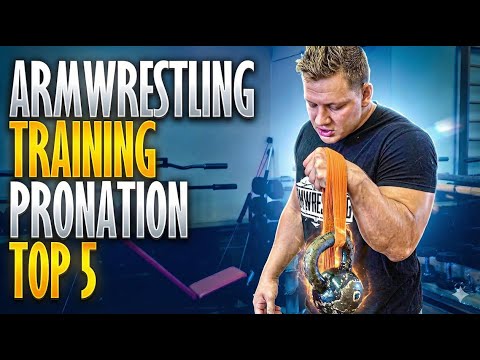
- Voice of Armwrestling — How To Train Pronation For Armwrestling | 5 Best Exercises
- Voice of Armwrestling — PRONATION EXERCISES WITH LOW CABLE FOR ARMWRESTLING
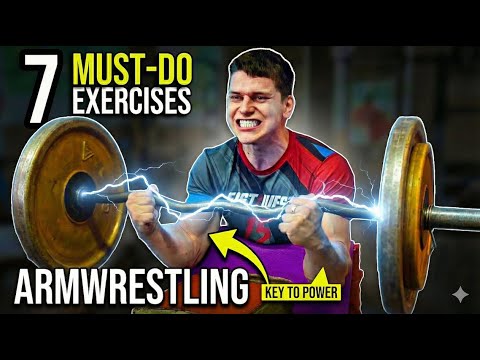
- Voice of Armwrestling — Arm Wrestling Exercises: 7 Gym Moves for Strength & Table Power
- Voice of Armwrestling — Arm Wrestling Training: 5 Essential Exercises
- ACSM 2026 — khuyến nghị tập sức mạnh cho người trưởng thành khỏe mạnh
- Ogawa và cộng sự, 2022 — tổng quan 153 ca gãy thân xương cánh tay khi vật tay
- Voice of Armwrestling — Toproll technique