Pronation training: straps, cables and retaining hand orientation
Separate forearm rotation from wrist bending and learn isolated, cable and combined pronation work, with strap-placement and evidence limits explained.
Contents
Forearm rotation, not sideways wrist bending
Pronation rotates the forearm toward palm-down. A constrained hand can produce rotational force without visibly turning far. Pronator teres and quadratus contribute while other muscles stabilize the wrist and elbow.
The resistance should create a supinating moment for you to resist or overcome. A strap pulling mainly through the palm can turn the task into elbow or grip work. Strap routing and load direction matter as much as the displayed weight.
Exercise one: supported light rotation
Support the elbow and part of the forearm and begin near a neutral grip. Use a soft strap with cable or elastic resistance that tries to turn the palm up; confirm that direction using minimal load. Keep the wrist near straight, pronate through a modest range and return slowly.
Start with two sets of 12–15, leaving three to four clean repetitions; rest 60–90 seconds. Avoid loaded end-range twisting or moving the entire shoulder around. Verify the resistance direction separately on the left arm instead of copying right-arm clockwise cues.
Exercise two: a low cable and strap
Sit or stand steadily facing a low cable with a controllable elbow angle. Route a flat strap to create a supinating moment through the hand without tightening around the thumb joint. Retain or produce pronation, then lower under control; keep the strap from slipping toward the fingertips.
Use two sets of 10–12 as an alternative once the setup is understood. If elbow flexion is added, record it as combined pronation/back pressure rather than an isolated lift. Stop for numbness, painful strap contact or thumb-joint distortion.
Exercise three: retain pronation during a small pull
Keep the established strap routing, reduce the load and draw the forearm a short distance toward you without allowing the hand to turn palm-up. The aim is to preserve rotation during a pulling demand, not maximize body-assisted lifting height.
Try two sets of 8–10 slow repetitions, or two short holds of 8–10 seconds once familiar. Choose one. If rotation disappears immediately as the elbow moves, review the setup before assuming insufficient pronator strength.
Equal kilograms can mean different leverage
A strap closer to the rotation axis, across the thumb side or farther along the hand changes the demand. Cable height, elbow height and handle stiffness also matter. There is no simple conversion between every online pronation-lift variation.
Photograph routing and note cable height and approximate elbow position. Repeat the same range and endpoint. Treat a new tool as a new exercise and rehearse with less load rather than forcing the previous number.
What the EMG evidence establishes
Fukunaga et al. (2023) measured two elastic-band exercises in ten healthy men. Their pronation task activated pronator teres and finger-flexor musculature, supporting the anatomical distinction between forearm loading directions.
This acute study did not track toproll victories or long-term sport performance. EMG cannot tell us a percentage improvement, establish a pain treatment or prove injury prevention. The schedules here are editorial examples; Coach Ray's video supplies practical coaching context.
Integrate it with rise and cup
Toprolls combine pronation with pulling and an appropriate amount of cup and rise; high hooks also retain rotational control. That does not justify adding multiple pronation workouts for every style. Select one main exercise and begin on separated days only if total arm loading allows.
Improve repeatable repetitions before adding a small load increment. Reduce or omit demanding rotation work near hard table practice. Never surprise a partner with a rotational surge; controlled release is part of competent practice.
Exercise video reference
Use the video to study movement order and equipment setup. The sets and repetitions in this guide are Hub's adjustable starting examples for healthy adults, not the filmed athlete's prescription or a pain-treatment protocol.
Continue the exercise library
- An armwrestling exercise map: what to train, why and where to start
- Rise and riser training: preserve hand height without shoulder cheating
- Toproll training: combine pronation, pulling and hand retention
- Low-hand-toproll training: lower-hand rotation with retained grip
- High-hook training: height, controlled cup and retained rotation
- Build an armwrestling week: two strength sessions, table time and progression
Sources & further reading
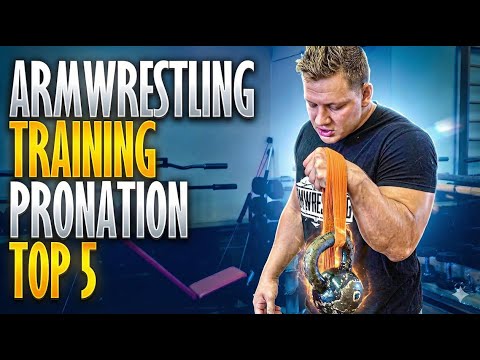
- Voice of Armwrestling — How To Train Pronation For Armwrestling | 5 Best Exercises
- Voice of Armwrestling — PRONATION EXERCISES WITH LOW CABLE FOR ARMWRESTLING
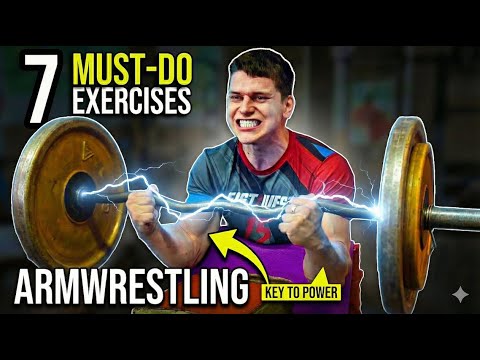
- Voice of Armwrestling — Arm Wrestling Exercises: 7 Gym Moves for Strength & Table Power
- Fukunaga và cộng sự, 2023 — EMG trong bài pronation và ulnar deviation, 10 người
- ACSM 2026 — khuyến nghị tập sức mạnh cho người trưởng thành khỏe mạnh
- Tarzan / Magazine House — hướng dẫn wrist curl và pronation, ảnh 小川朋央, chỉ dẫn 清水忍