Finger strength and containment: more than closing a gripper
Train finger containment, handle support and extensors while distinguishing these tasks from maximal crushing grip and unsupported rice-bucket claims.
Contents
Three grip tasks are not one score
Crushing closes the hand, support grip retains an object and containment resists an opponent opening the fingers. Finger flexors contribute to each, but load path and hand shape differ. A heavy gripper close does not establish every table grip.
Peeling may reflect strength, handle fit or lost wrist position. Review cup and placement too. Avoid large isolated loads on individual fingertips in an attempt to find the weakest digit.
Exercise one: supported finger curls
Support the forearm and use a light handle with the wrist near neutral or modestly flexed. Allow a short controlled roll through the fingers, then close them to return the handle toward the palm. Do not drop to the fingertips or flick the wrist to rescue the load.
Start with two sets of 12–15, leaving three to four repetitions. A small controlled roll is enough. Use a manageable handle diameter and keep feet clear of the lowering or accidental-drop path.
Exercise two: a supported cylindrical-handle hold
Use a secure cylindrical handle with a manageable load and an elbow support or nearby lowering point. Retain the chosen wrist angle and finger contact. Lower as slipping begins instead of shifting all the load onto the remaining fingertips.
Try two holds of 10–15 seconds instead of finger curls. Numbness or pinched skin is not a useful endurance target. A thicker handle changes the task but is not automatically better for every hand size.
Exercise three: combine containment and cup
With a rolling handle or multispinner, combine finger closure and wrist flexion at a light load. Identify whether fingers, wrist or elbow position fail first. Moving the weight is not a successful repetition if the hand shape changes completely.
Use two sets of 10–12 in place of isolated cup or finger work. Check smooth rotation, edges and balanced routing. Begin with whole-hand contact; deliberately finger-biased versions need reduced load and informed coaching.
Finger and wrist extension
Open the fingers against a light elastic loop, then close slowly for one or two sets of 15–20. Keep the band away from the face. This trains the opposite action without proving perfect balance or a cure for elbow pain.
For wrist extension, support the forearm palm-down with the hand beyond the edge; raise and lower the back of the hand comfortably for one or two light sets of 12–15. Do not chase a fixed ratio to cup strength or substitute this for rehabilitation.
Where grippers, towels and rice buckets fit
Grippers can supplement crushing strength if both closing and opening remain controlled, but do not replace every hand task. Towels on a row handle can increase grip demand; unsupported full-body towel hangs are unnecessary when a normal handle is already difficult.
Rice buckets allow varied light movement with poorly standardized resistance. They can be optional movement work, not a proven tendon-strengthening cure. Hundreds of extra repetitions still add workload after hard pulling.
Select, measure and stop appropriately
Choose one main finger or handle task and a small amount of extension if appropriate, initially on separated days. Log handle diameter, hand shape, duration/repetitions and load. Deep and open grips are different tests rather than immediately comparable strength changes.
Stop for burning skin, numb digits, finger-joint pain or wrist collapse. Everyday hand function and the next session matter. Containment training does not require sacrificing skin or joint comfort for a longer hold.
Exercise video reference
Use the video to study movement order and equipment setup. The sets and repetitions in this guide are Hub's adjustable starting examples for healthy adults, not the filmed athlete's prescription or a pain-treatment protocol.
Continue the exercise library
- An armwrestling exercise map: what to train, why and where to start
- Training cup: wrist curls, position holds and finger containment
- A hook training session: cup, containment, supination and closeness
- Low-hand-toproll training: lower-hand rotation with retained grip
- The classic armwrestling strength lifts: curls, rows, pull-ups and triceps
- Build an armwrestling week: two strength sessions, table time and progression
Sources & further reading
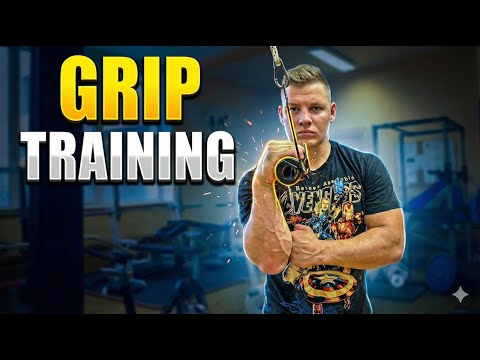
- Voice of Armwrestling — Finger and Grip training (ARM WRESTLING EXERCISE)
- Voice of Armwrestling — Improve Your Arm Wrestling Technique with the Devon Larratt Multispinner
- Voice of Armwrestling — Strengthening Your Forearms: Effective Wrist Extension Exercises
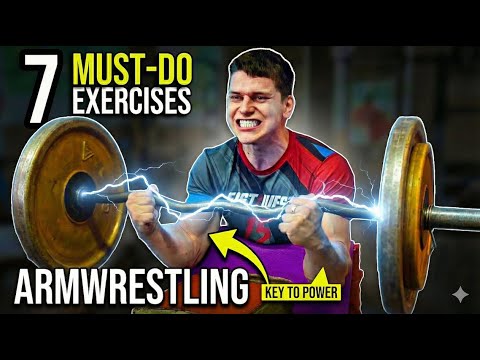
- Voice of Armwrestling — Arm Wrestling Exercises: 7 Gym Moves for Strength & Table Power
- ACSM 2026 — khuyến nghị tập sức mạnh cho người trưởng thành khỏe mạnh
- AAOS OrthoInfo — nhóm gấp–sấp và đau mặt trong khuỷu