Training cup: wrist curls, position holds and finger containment
Learn supported dumbbell wrist curls, cable cup and modest holds, including handle placement, range, common substitutions and scheduling.
Contents
Cup is not just squeezing or curling the elbow
Cup is wrist flexion toward the palm. Wrist flexors supply the action while finger flexors help retain the handle. Squeezing an object without an external wrist-opening moment differs from resisting an opponent's opening pressure.
Watch the wrist joint before counting kilograms. If the weight rises mainly through elbow flexion or shoulder movement, the exercise has changed. Handle diameter, finger position and pulling direction all alter the demand.
Exercise one: supported dumbbell wrist curl
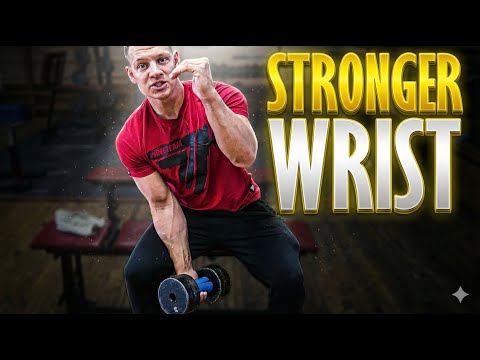
Sit with the forearm supported palm-up and the hand just beyond the bench edge. Keep the elbow and forearm still, secure the dumbbell and start near a straight wrist. Flex through a comfortable range and lower slowly back to the starting position.
Rehearse lightly until wrist flexion is distinct from finger closing. Start with two sets of 12–15, leaving three to four repetitions in reserve; rest 60–90 seconds. Do not deliberately roll to the fingertips or force the wrist into its deepest extended position.
Exercise two: cable cup and the opening force
Use a secure rolling or cylindrical handle with the cable positioned to open the wrist. Support the elbow or forearm on padding. Flex the wrist without dragging the elbow backward to lift the stack, then return slowly.
Choose two sets of 10–15 instead of, rather than automatically in addition to, dumbbell curls. Cable direction and handle leverage matter: a heavier stack does not necessarily mean more wrist torque. An oversized handle that leaves only fingertip contact is optional, not superior by definition.
Exercise three: a modest active cup hold
After learning the movement, select a moderate cup position with a light load. Keep the wrist from opening, avoid shoulder jerks and breathe continuously. Lower the load deliberately before the position collapses.
You may replace a dynamic exercise with two holds of 8–12 seconds. Shorten them if control is lost sooner. Do not rest the handle on the chest or bench and count it as active wrist strength, or chase an unrepeatable split-second lift.
Four ways the number can improve while the task changes
Elbow pulling raises the load without wrist flexion. Finger rolling moves the handle mainly through the fingers. Lifting the supported forearm recruits other joints. Shrinking range makes equal repetition counts misleading.
Film from the side and standardize support and cable direction. Finger action is appropriate in a combined finger-and-cup exercise, but its performance should not be compared directly with an isolated wrist version. Record handle changes as new variations.
Using cup across technical families
A hook couples cup with containment and closeness; a high hook also retains height. A toproll can use cup but still needs pronation. Select a repeatable gym exercise, then assess whether control survives a light combined task.
For a cooperative drill, retain a moderate cup at center while a partner gradually applies and releases gentle opening pressure. Stop before position is lost and do not contest the pin. Supported gym work is easier to regulate than a heavy inside struggle without coaching.
Schedule the work and monitor elbow response
Begin with one cup exercise per arm-focused session, for example two sets on two separated days, while counting existing curls and table work. Add a small increment only after repeatable upper-range sets and an acceptable next-session response. Avoid adding diameter, sets and load together.
AAOS describes the anatomical connection of wrist/finger flexion and pronation to the medial elbow. Pain there is not proof of beneficial tendon adaptation. Stop for sharp pain, numbness or escalating symptoms; persistent problems need assessment. This guide is not a golfer's-elbow treatment protocol.
Exercise video reference
Use the video to study movement order and equipment setup. The sets and repetitions in this guide are Hub's adjustable starting examples for healthy adults, not the filmed athlete's prescription or a pain-treatment protocol.
Continue the exercise library
- An armwrestling exercise map: what to train, why and where to start
- Finger strength and containment: more than closing a gripper
- A hook training session: cup, containment, supination and closeness
- Toproll training: combine pronation, pulling and hand retention
- The classic armwrestling strength lifts: curls, rows, pull-ups and triceps
- Build an armwrestling week: two strength sessions, table time and progression
Sources & further reading
- Voice of Armwrestling — Arm Wrestling Training: Dumbbell Wrist Curls for Cupping
- Voice of Armwrestling — CABLE WRIST CURLS for ARM WRESTLING TRAINING
- Voice of Armwrestling — Improve Your Arm Wrestling Technique with the Devon Larratt Multispinner
- ACSM 2026 — khuyến nghị tập sức mạnh cho người trưởng thành khỏe mạnh
- AAOS OrthoInfo — nhóm gấp–sấp và đau mặt trong khuỷu
- Tarzan / Magazine House — hướng dẫn wrist curl và pronation, ảnh 小川朋央, chỉ dẫn 清水忍